Why Your Dog Still Pulls, Jumps and Chews (and Why More Walks Won't Fix It)
Quick answer
Pulling, jumping and chewing usually come from three causes: an under-used brain, behavior that has been rewarded before, and inconsistent house rules. More walks tire the body but rarely fix them. What helps most dogs is 10 to 15 minutes of daily mental work, 3 to 5 minute reward-based training sessions, and management so the old habit stops paying off. Aggression or fear needs a vet and a certified behavior professional.
We may earn a commission from links on this page, at no extra cost to you. Disclosure
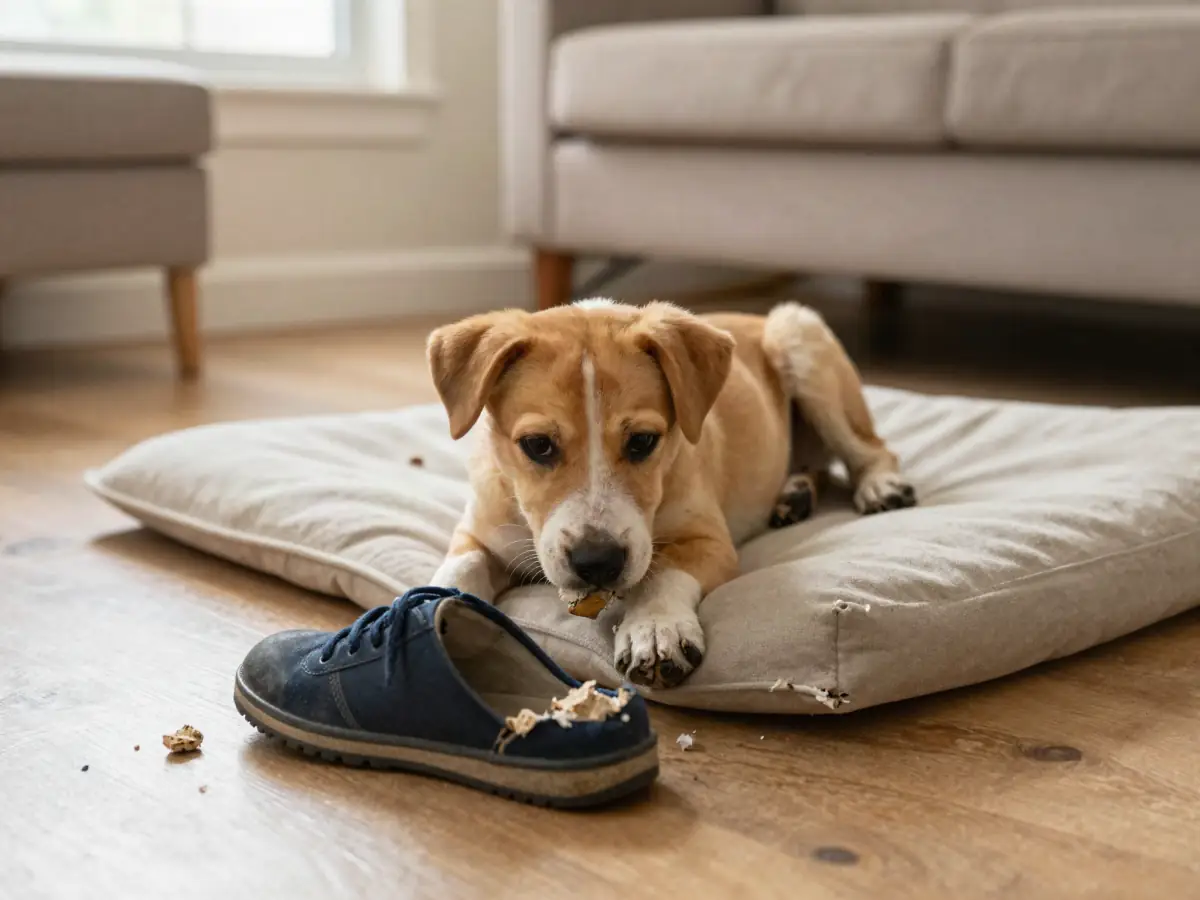
You walked the dog for an hour this morning. You came home to a chewed shoe, a dog who launched himself at your neighbor, and a living room that looks like a pillow exploded. If that sounds familiar, you are not failing as an owner. Most pulling, jumping and chewing comes from three fixable causes, and only one of them has anything to do with exercise.
The everyday chaos most owners know too well
Ask a group of dog owners what drives them up the wall and the same list comes back: chewed shoes, embarrassing walks, a dog that jumps on every guest, and a dog that seems bored no matter what you do. None of these are rare. Chewing, jumping up and pulling on the leash are among the most common everyday complaints in pet dogs.
They also tend to arrive together. A dog that chews when left alone often pulls on walks and jumps when the door opens. That is a clue: one root cause is usually feeding all three.
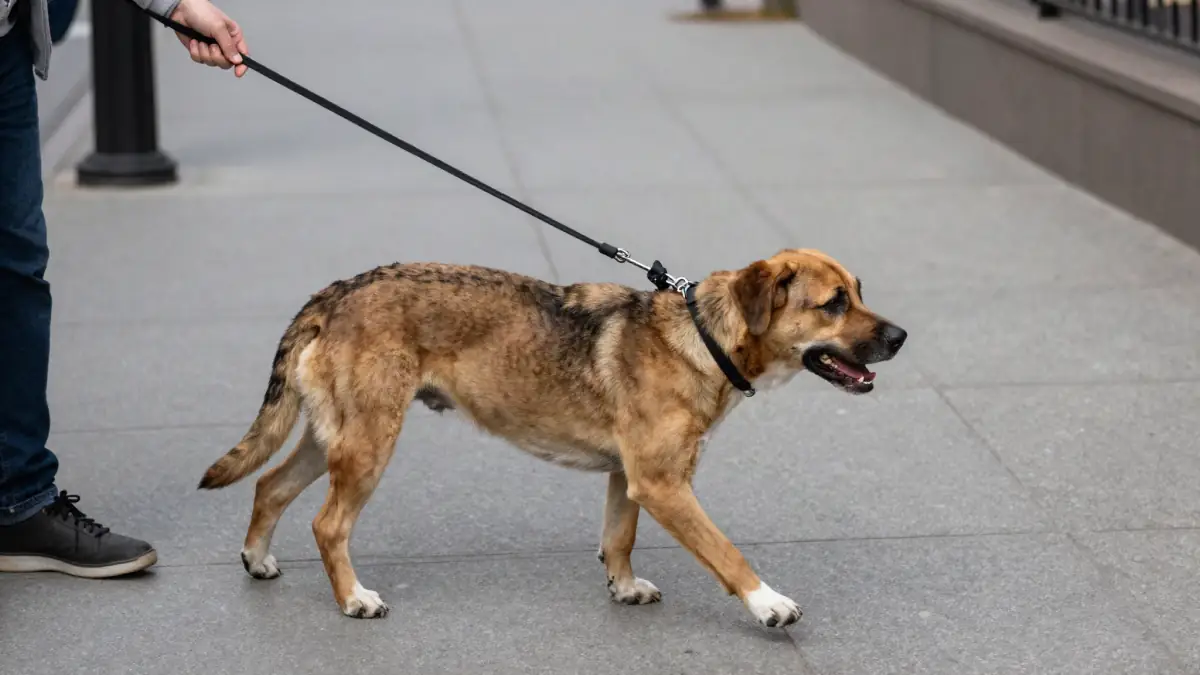
The walk that feels like a tug-of-war
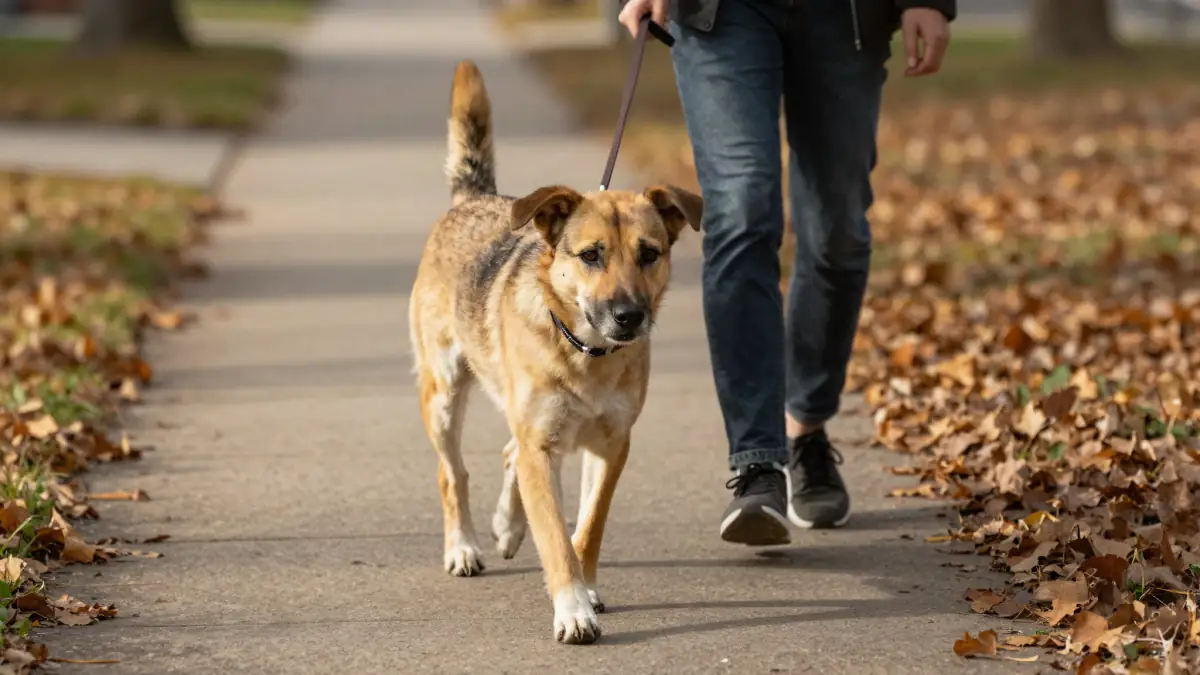
The leash goes tight the moment you step outside. Your shoulder aches by the corner. You cross the street to avoid other dogs, not because your dog is dangerous, but because you are tired of being dragged. Pulling turns the one activity meant to calm your dog into the most stressful 30 minutes of your day.
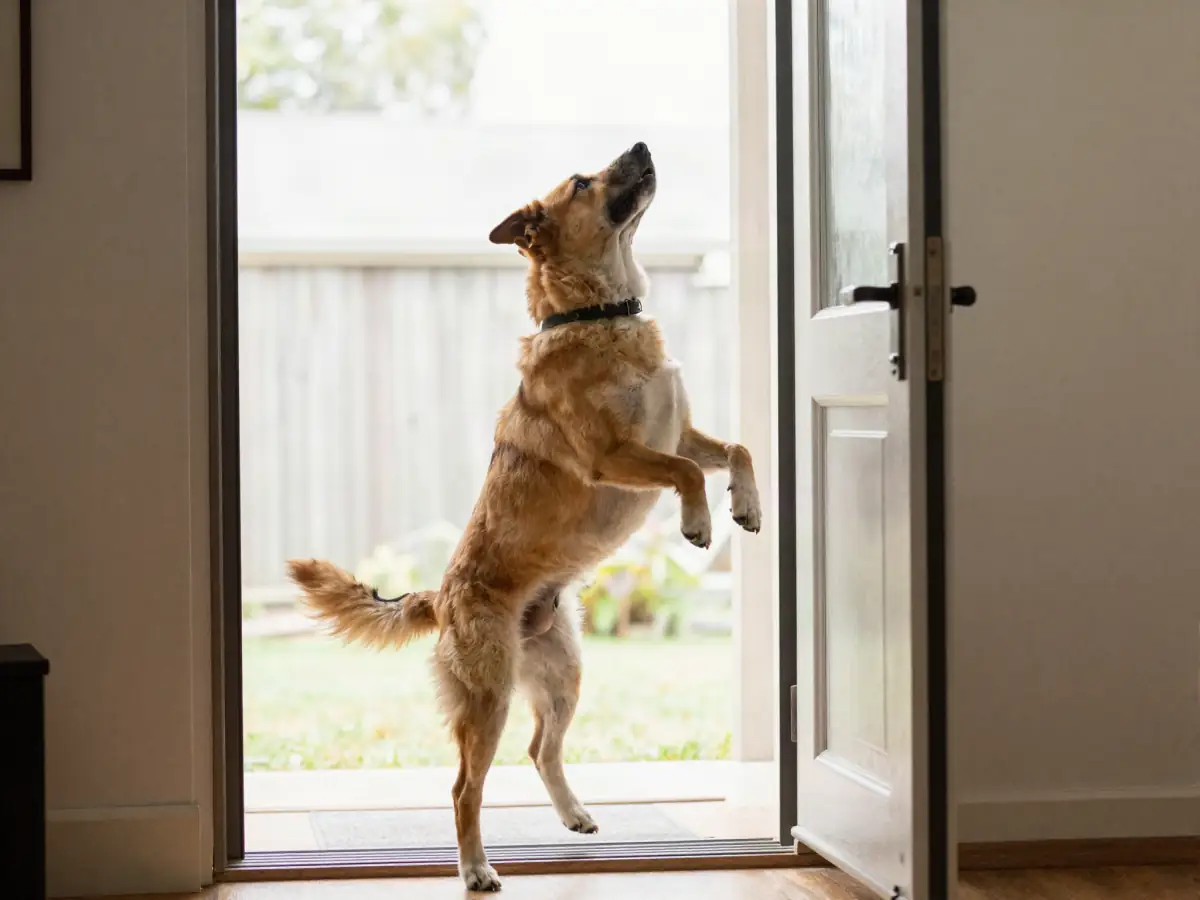
The guest who gets a paw print on their coat
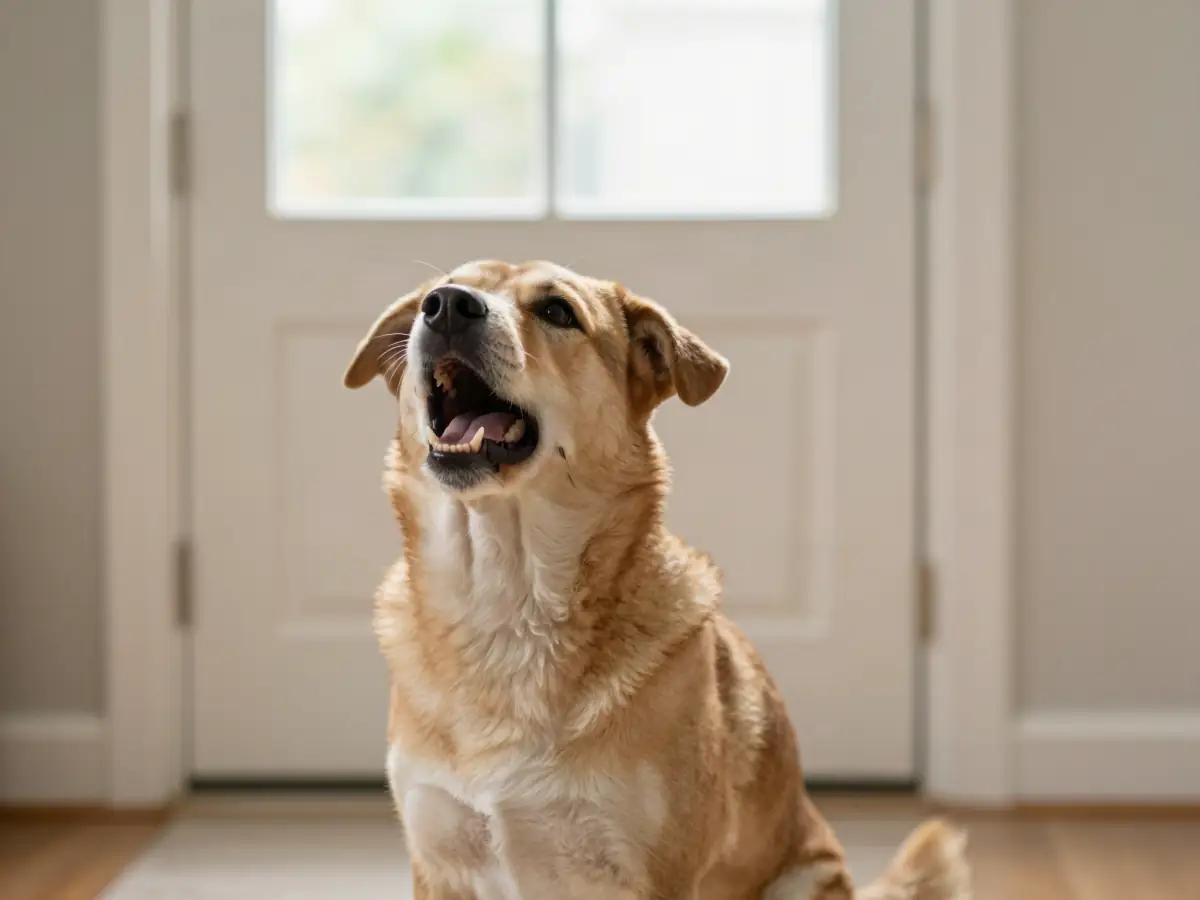
Someone rings the bell and your dog turns into a pogo stick. You apologize, grab the collar, and spend the visit managing the dog instead of talking. For families with small children or older relatives, jumping is more than embarrassing. A 30 kg dog can knock a person over.
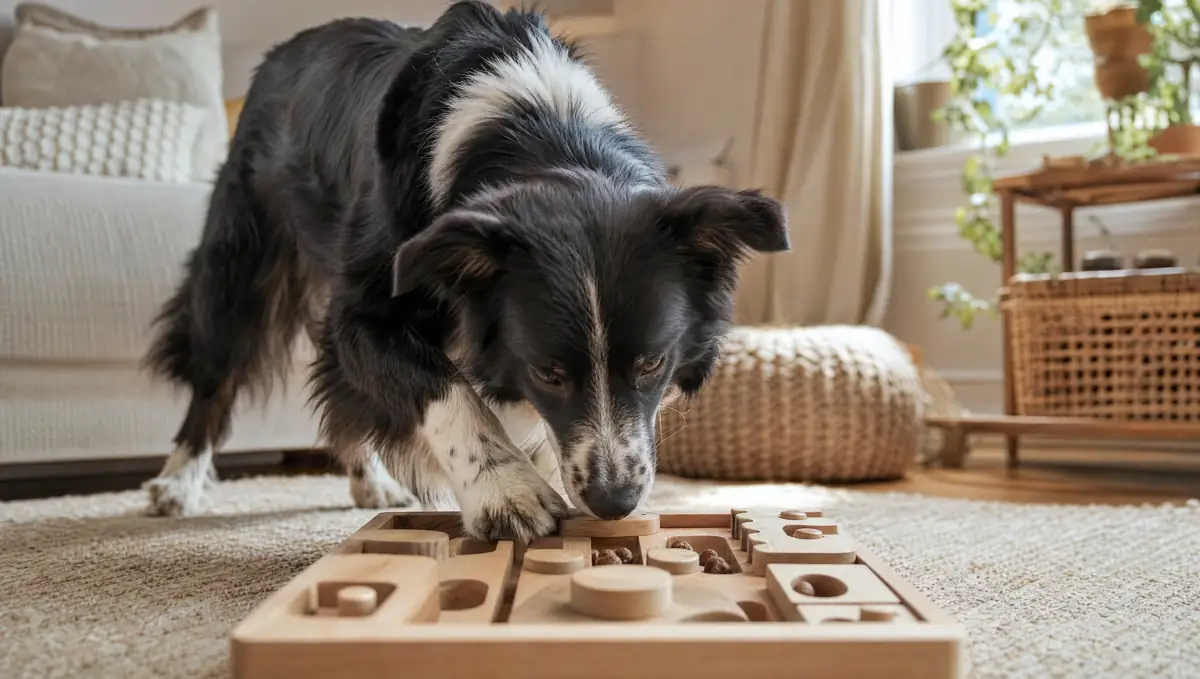
A tired body and a satisfied brain are not the same thing. Many dogs get plenty of the first and almost none of the second.
Want a ready-made plan for the "brain" side? Brain Training for Dogs is a $67 one-time online course of 21+ reward-based games (checkout price Oct 11, 2026).
See the 21 brain games →Paid link · opens the vendor's sales page.

Why more walks rarely fix it
The usual advice is "a tired dog is a good dog," so owners add longer walks. It helps a little, then the dog gets fitter and needs even more. Physical exercise matters, but it mostly works the legs. Pulling, jumping and chewing are often signs of an under-used brain, not just unspent energy.
Dogs evolved to sniff, search and solve small problems for food. A pet dog that eats from a bowl in 40 seconds and walks the same route every day has very little to think about. That spare mental energy has to go somewhere, and your shoes are a convenient outlet.
The 3 real causes behind pulling, jumping and chewing
Most everyday problem behavior traces back to three things. You can usually spot all three in the same house.
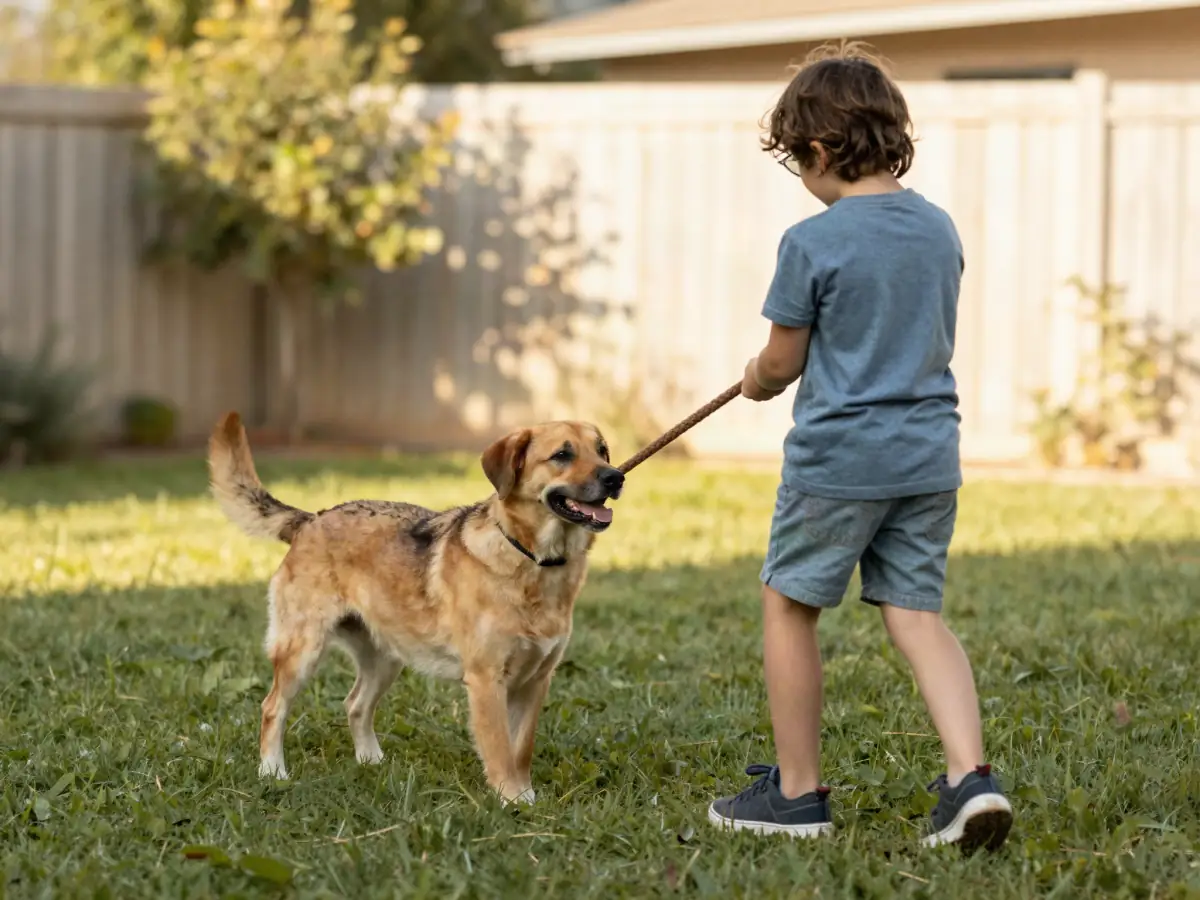
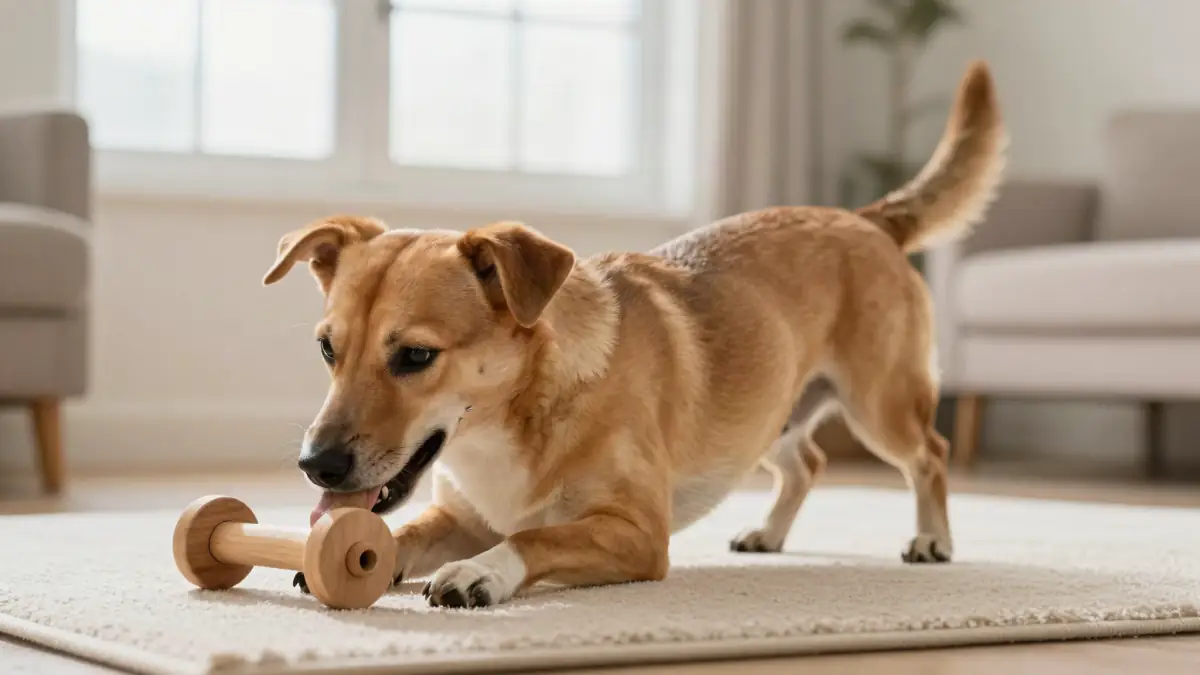
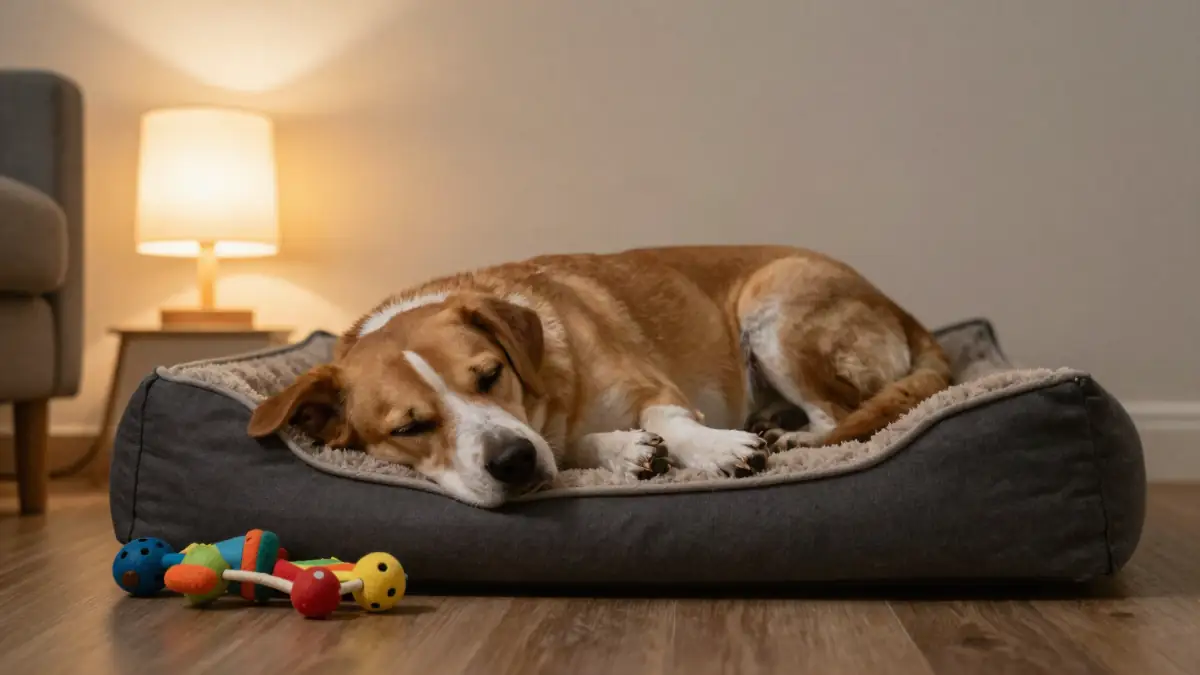
Illustrative photos.

Cause 1: under-stimulation
A dog needs both physical and mental work. When the mental side is missing, dogs invent their own jobs: shredding, digging, barking at the window, or racing ahead on the leash to sniff everything at once. Chewing in particular is a normal dog behavior. The problem is not the chewing; it is what gets chewed and how much spare time the dog has to do it.
Cause 2: the behavior has been rewarded
Dogs repeat what works. Jumping gets eye contact, hands and voices, even if the voice says "off!". Pulling works because every time the dog pulls, it gets closer to the smell it wanted. A chewed shoe gets you running across the room. From the dog's point of view, each of these is a strategy that pays off, often several times a day.
This is good news. If a behavior was learned through rewards, a better behavior can be learned the same way.
Cause 3: inconsistent rules
In many homes, one person lets the dog jump up, another pushes it down, and a third yells. The dog gets three different answers to the same question, so it keeps asking. Families with kids see this most. A single set of house rules, written on the fridge if needed, removes a surprising amount of confusion.
Brain Training for Dogs uses reward-based games only, in 7 levels from beginner to advanced. 60-day refund (checked Oct 11, 2026).
See the levels & price →Paid link · opens the vendor's sales page.
What actually helps
There is no single trick. What works for most pet dogs is a combination of three habits: daily mental work, short reward-based training sessions, and management so the old behavior stops paying off. Reward-based training is also what the American Veterinary Society of Animal Behavior (AVSAB) recommends over punishment-based methods.

1. Add 10 to 15 minutes of mental work a day
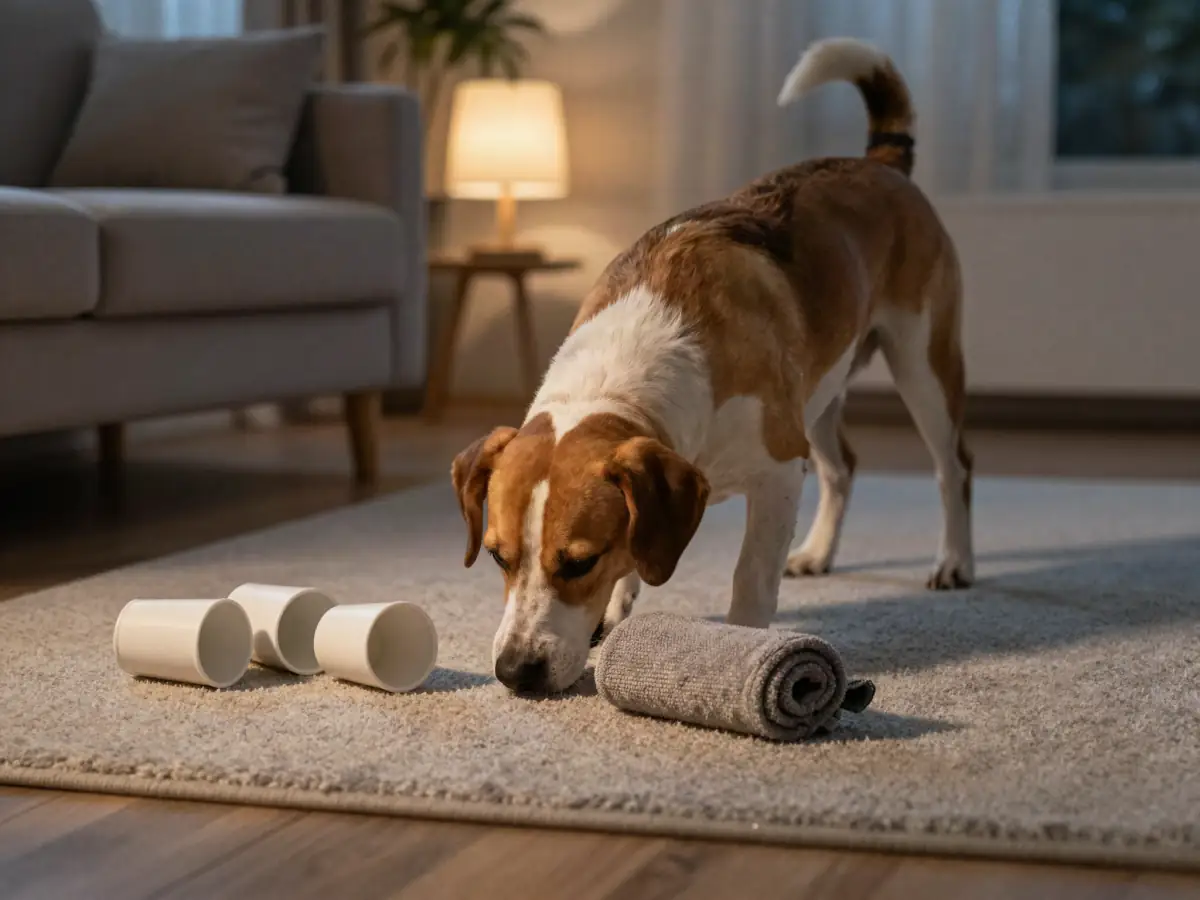
Sniffing and puzzle games use the brain in a way that walks usually don't. A muffin tin with tennis balls, a towel rolled around treats, or a scatter of kibble in the grass takes 1 to 3 minutes to set up. Two or three short sessions a day, using part of the daily food, is a realistic start. Our dog brain games guide has six to try.
2. Train in short, rewarding sessions
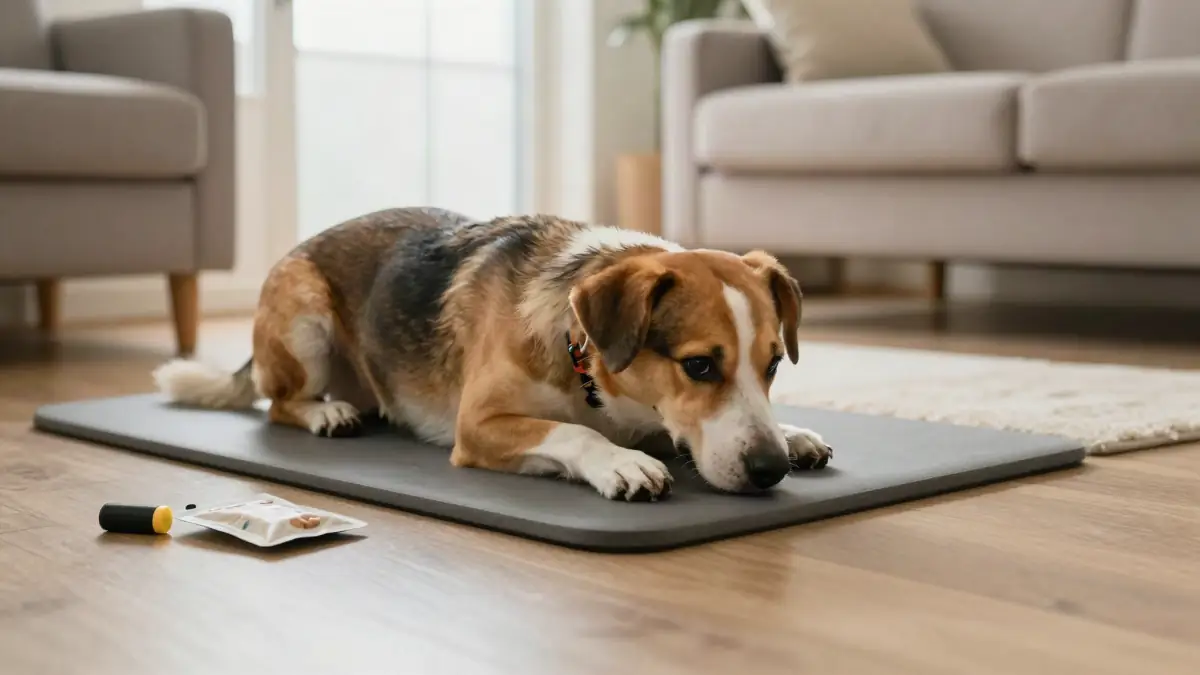
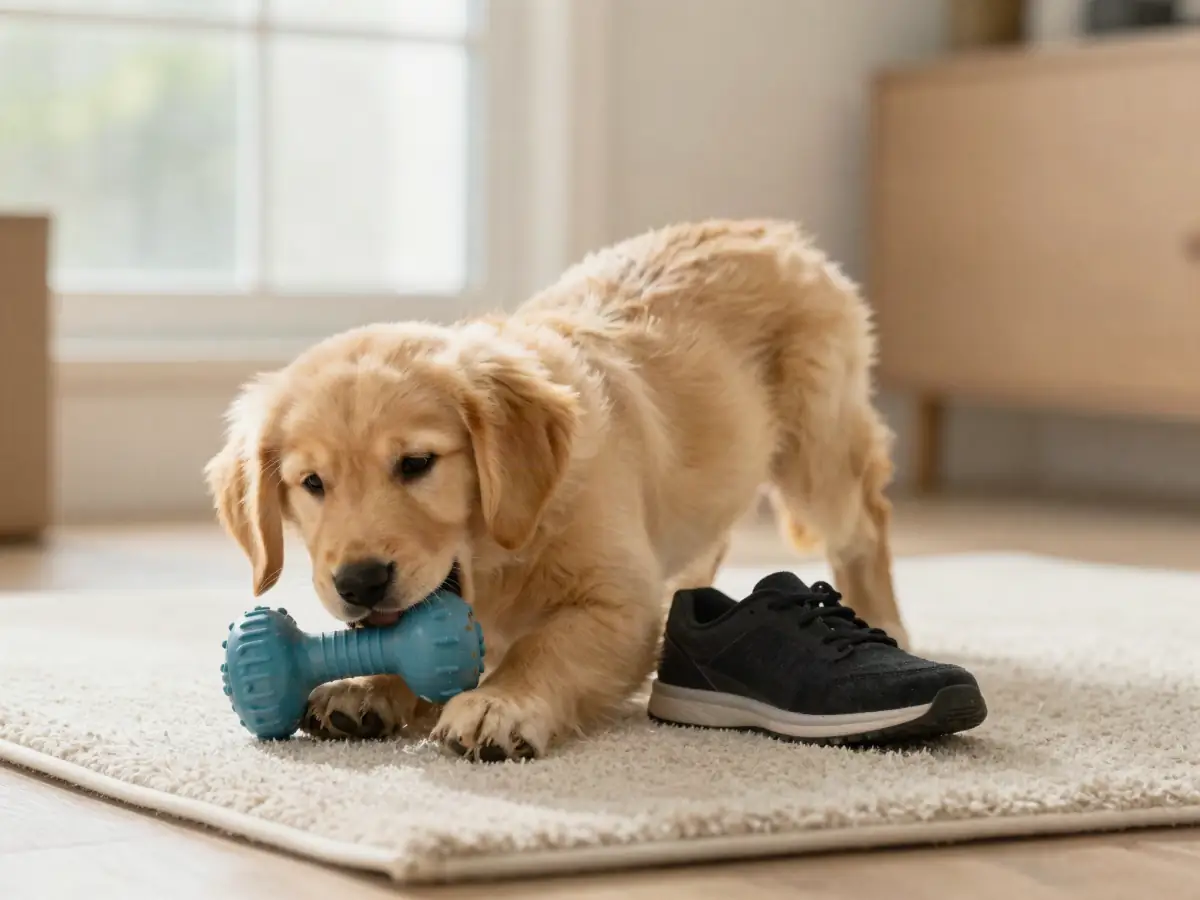
Teach the dog what to do instead. Sit for greetings instead of jumping. Walk beside you to earn forward movement instead of pulling. Chew the toy you offer instead of the shoe. Keep sessions to 3 to 5 minutes, end on a win, and reward the right choice within a second or two. Five short sessions beat one long one.
3. Manage the environment while you train
Training takes weeks. In the meantime, stop the old habit from paying off. Put shoes away. Use a baby gate or leash when guests arrive. Give the dog a legal chew when you leave. Management is not cheating; it simply stops the dog from practicing the behavior you are trying to replace.
Management stops the problem today. Training builds the new habit. Mental work removes the reason the problem started.
A simple plan by problem
| Problem | Manage it | Teach instead | Mental work |
|---|---|---|---|
| Chewing shoes | Shoes away, gates, supervised freedom | "Trade" a toy for the item, praise chewing the toy | Towel burrito or box dig before you leave |
| Pulling on leash | Front-clip harness, quieter routes | Stop when the leash tightens, move on when it loosens | 5-minute sniff game before the walk |
| Jumping on guests | Leash or gate at the door | Sit for attention, four paws on the floor earns greetings | Find-it scatter while guests settle |
| Bored, restless at home | Calm area, chew toys rotated | "Settle" on a mat | 2 to 3 brain games a day |
For more detail, see our free guides on how to stop leash pulling, puppy biting and mental stimulation for dogs.
How long until you see a change?
It depends on the dog, the age of the habit, and how consistent the household is. Many owners notice a calmer dog within days of adding brain games, but changing a long-practiced habit like pulling usually takes weeks of daily practice. No honest trainer or course can promise a fixed result by a fixed date. See how long it takes to train a dog for realistic timelines.
If you would rather follow a set plan than invent games, this is one structured option. Research-based, not a hands-on test.
Try it with the 60-day refund →Paid link · opens the vendor's sales page.
Where Brain Training for Dogs fits
Brain Training for Dogs is an online course credited to trainer Adrienne Farricelli (CPDT-KA, per the vendor). The vendor says it includes 21+ brain games across 7 levels, plus trick videos, an article archive, a puppy section and a behavior bonus covering chewing, jumping and barking. On October 11, 2026 the checkout showed $67 one-time with a 60-day refund window.
It suits owners who want a step-by-step order for the mental-work and short-session habits above. It does not watch your dog or give live feedback, and it needs daily practice. Our full research-based review covers what we could and could not verify.
When it is not a training problem
Some chewing, jumping or pulling is not boredom. Sudden new chewing can point to pain, dental problems or teething. Destruction only when you leave may be separation distress. Lunging, growling, snapping or biting is a different category. In those cases, see your veterinarian first, then a certified behavior professional such as a veterinary behaviorist, a CAAB or an IAABC-certified consultant. A course is not a substitute.
The short version
More walks help the body. Pulling, jumping and chewing usually need three other things: daily brain work, short reward-based training, and management so the old habit stops paying. Start tonight with one 10-minute game from our list of 5 brain games you can play tonight. If you want a full program, compare options in our best online dog training courses roundup.
Ready for a structured plan? $67 one-time, 60-day refund (checked Oct 11, 2026).
See the 21 brain games →Paid link · opens the vendor's sales page.
Frequently asked questions
Why does my dog still chew things after a long walk?
Walks tire the body but often leave the brain under-used. Chewing is a normal dog behavior that fills that gap. Daily sniffing and puzzle games, legal chew toys and putting shoes away usually help more than a longer walk.
Why does my dog jump on guests?
Jumping usually gets attention, eye contact and hands, so it has been rewarded. Teach a sit for greetings, reward four paws on the floor, and use a leash or gate at the door while the new habit forms.
Will more exercise stop my dog pulling on the leash?
Rarely on its own. Pulling works because it gets the dog closer to what it wants. Stop when the leash tightens, move on when it loosens, and add a short sniff game before walks.
How much mental stimulation does a dog need?
Many owners start with 10 to 15 minutes a day, split into two or three short brain games using part of the daily food. Adjust to your dog's age, breed and energy.
How long does it take to stop these behaviors?
Many owners see a calmer dog within days of adding brain games, but changing a long-practiced habit like pulling usually takes weeks of daily practice. No honest course can promise a fixed result by a fixed date.
When should I see a professional?
If chewing starts suddenly, destruction happens only when you leave, or your dog growls, snaps, bites or seems very fearful, see your veterinarian first and then a certified behavior professional such as a veterinary behaviorist, CAAB or IAABC-certified consultant.
More from the blog
Best 5 Online Dog Training Courses in 2026
5 online dog training courses compared on method, structure, price and refund (Oct 2026): Brain Training for Dogs, Dunbar Academy, SpiritDog, more.
5 Brain Games You Can Play Tonight With Things at Home
5 easy dog brain games with household items: muffin tin, cup shell game, towel burrito, box dig and hide and seek. Steps, safety tips, 20-min plan.

Brain Training for Dogs vs Dunbar Academy: Which Online Course Fits Your Dog?
Brain Training for Dogs ($67 one-time, 60-day refund) vs Dunbar Academy ($20/month or $97-$200 per course, 30-day refund): table, verdict, who picks which.