How to Stop a Dog Pulling on the Leash: Loose-Leash Walking in 5 Steps
We may earn a commission from links on this page, at no extra cost to you. Disclosure
Quick answer
Dogs pull because pulling gets them where they want to go. Stop moving whenever the leash goes tight, reward the dog at your side for a loose leash every few steps, and add distractions slowly. Most dogs improve within 1 to 2 weeks of short daily practice; skip prong, choke, and shock collars.
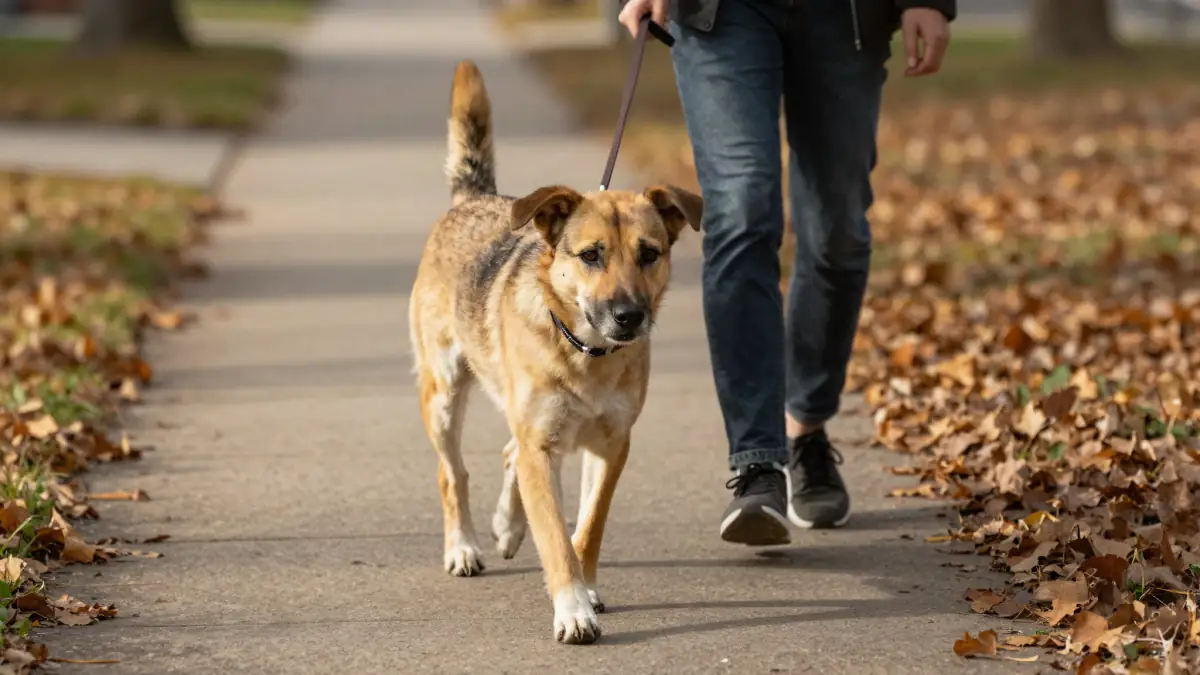
Quick answer: To stop a dog pulling on the leash, stop moving the moment the leash goes tight, and reward the dog for walking with a loose leash next to you. Dogs pull because pulling works: it gets them to the next smell faster. When pulling stops the walk and a loose leash keeps it going, most dogs change within a few weeks of short daily practice. This guide uses reward-based methods only, in line with the American Veterinary Society of Animal Behavior (AVSAB) position that dog training should rely on rewards, not pain or fear.
Why dogs pull on the leash
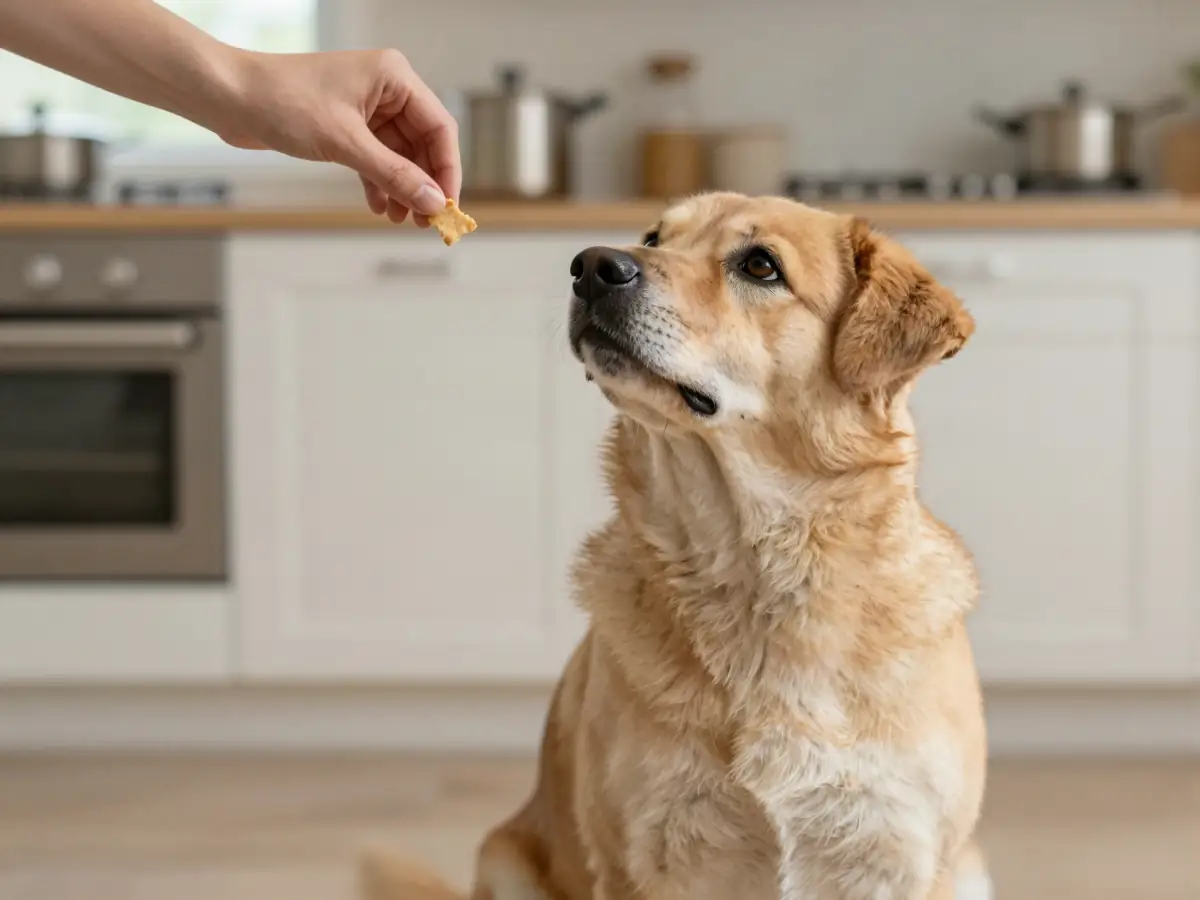
Dogs walk faster than people, and the world outside is full of smells, other dogs, and squirrels. Every time a dog pulls and gets closer to something it wants, pulling is rewarded. Most pulling is not stubbornness or "dominance." It is a habit that has paid off hundreds of times.
Other common drivers are excitement at the start of a walk, too little exercise during the day, and a dog that has never been shown what a loose leash feels like. Fear can also cause pulling, usually toward home or away from a trigger. That kind of pulling needs a different plan, covered near the end.
What you need
Loose-leash training needs only a few simple items, and none of them should cause discomfort.
- A flat collar or a well-fitted harness. A front-clip harness, where the leash attaches at the chest, turns the dog slightly sideways when it pulls and gives many owners extra control while training.
- A 6-foot (about 2-meter) leash. Retractable leashes teach dogs that pulling earns more line, so leave them at home while you train.
- Small, soft, high-value treats. Pea-sized pieces of cooked chicken, cheese, or soft training treats. You may use 50 to 100 in an early session, so subtract them from daily food.
- A treat pouch so your hands stay free.
Skip prong, choke, and shock collars. AVSAB advises against aversive tools because they can cause pain, fear, and injury to the neck, and they do not teach the dog what to do instead.
Step 1: Build value for the spot next to you
Start indoors, where nothing is more interesting than you. Pick a side (left or right) and keep it the same. Stand still, and every time the dog is near your leg, drop a treat right by your foot on that side. Then take one step. If the dog stays close, mark it with "yes" and treat at your leg again.
Repeat for 5 minutes, two or three times a day. Within a few sessions, most dogs start hanging around that spot because it is where good things happen. That is the foundation of loose-leash walking.
Step 2: Be a tree (stop when the leash goes tight)
Now add the rule that changes the habit: a tight leash means we stop.
- Walk forward with the leash loose, hanging in a J shape.
- The second the leash goes tight, stop and stand still. Do not pull back, jerk, or talk.
- Wait. Most dogs eventually look back or step toward you, and the leash loosens.
- The moment it loosens, mark with "yes," treat at your leg, and start walking again.
Early walks will be slow. You may only cover one block in 10 minutes. That is normal, and it is the fastest way to teach the rule, because every single pull has to stop working. If one person lets the dog pull and another stops, the dog learns to keep trying.
Step 3: Turn and go the other way
For dogs that get frustrated standing still, use direction changes. When the leash starts to tighten, say a cheerful "this way," turn around, and walk in the opposite direction. When the dog catches up to your side, mark and treat. Pulling now takes the dog away from what it wanted.
Mix stops and turns. Some trainers call this "penalty yards": the dog pulls toward a tree, you back up a few steps, and you only move forward again once the leash is loose. It is a calm consequence, not a punishment.
Step 4: Reward a loose leash often
Many owners only notice the dog when it pulls. Flip that. Reward the dog often for being near your side with a loose leash, then thin out the rewards slowly.
| Week | Reward a loose leash about every |
|---|---|
| 1 | 3 to 5 steps |
| 2 | 10 steps |
| 3 | 20 steps |
| 4 and on | Now and then, plus sniff breaks |
You can also use life rewards. If the dog wants to sniff a lamppost, wait for a loose leash, then say "go sniff" and walk there together. Access to the smell becomes the reward for walking nicely, which is powerful because it is exactly what the dog wanted.
Step 5: Add distractions slowly
A dog that walks well in a hallway may still pull hard past another dog. That is not failure. It means the distraction is too strong for the current level of training. Use this order and move to the next level only when the dog succeeds about 8 times out of 10.
| Level | Where to practice | Typical time at this level |
|---|---|---|
| 1 | Inside the house, hallway or living room | 3 to 5 days |
| 2 | Backyard or driveway | About 1 week |
| 3 | Quiet street at a quiet time of day | 1 to 2 weeks |
| 4 | Normal neighborhood walk | 2 to 4 weeks |
| 5 | Busy park, other dogs, people | Ongoing, keep distance at first |
These times are rough guides. Puppies, young adult dogs, and dogs with years of pulling history often need longer. Keep your distance from the hardest triggers, such as other dogs, until the dog can stay calm and take treats.
Illustrative photos.
Make walks easier before you leave the house
Pulling is worse when a dog is wound up. A few small changes help a lot:
- Calm leash-up. If the dog spins when the leash comes out, put it back and wait. Clip it on only when the dog sits or stands still.
- Burn some brain energy first. Two or three minutes of a sniffing game, like a snuffle mat or treat scatter, takes the edge off. See our guide to dog brain games for quick ideas.
- Allow sniff time. Give the dog regular "free" moments to sniff on a cue, so the whole walk does not feel like a test.
- Keep training walks short. Ten to fifteen minutes of focused practice beats a frustrating hour.
If you would like a structured plan of games that build focus and impulse control indoors, one option is Brain Training for Dogs, a $67 one-time online course with a 60-day refund window (as checked October 2026). Our Brain Training for Dogs review covers what is inside and who it suits.
Paid link · opens the vendor's sales page.
Common mistakes
Most stalled leash training comes down to a handful of habits.
- Letting pulling work "just this once." Every successful pull resets progress a little. If you are in a hurry, use a front-clip harness and accept that this walk is not a training walk.
- Treating in front of you. Rewards delivered ahead of you pull the dog forward. Always deliver treats at your leg on the chosen side.
- Constant chatter. Repeating "heel, heel, heel" teaches the dog to tune out the word. Say it once or not at all.
- Leash pops and jerks. These are aversive, can injure the neck, and often make reactive dogs worse.
- Expecting a perfect heel. A loose-leash walk only means the leash stays slack. The dog can be a little ahead or behind, and can sniff when you allow it.
When pulling is about fear or reactivity
If your dog lunges, barks, or pulls hard toward or away from other dogs, people, or traffic, the pulling may be driven by fear or frustration, not just excitement. Signs include a stiff body, raised hackles, a tucked tail, or trying to bolt home. Keep more distance from triggers, avoid crowded routes, and do not use corrections.
For lunging, growling, or any aggression, start with your veterinarian to rule out pain, then work with a certified behavior professional, such as a veterinary behaviorist (DACVB), a Certified Applied Animal Behaviorist (CAAB), or an IAABC-certified consultant. Our guide on how to stop dog barking explains desensitization and counter-conditioning, which are also used for leash reactivity.
How long until my dog stops pulling?
Most dogs show clear improvement within 1 to 2 weeks of daily 5 to 15 minute sessions, and many walk reliably on a loose leash on familiar routes after 4 to 8 weeks. Dogs with a long pulling history, very high energy, or strong reactions to other dogs can take several months. Results depend on consistency more than on any tool. For a broader picture of training timelines, see how long it takes to train a dog.
Frequently asked questions
What is the fastest way to stop a dog pulling on the leash?
Stop walking every time the leash goes tight and start again only when it loosens, while rewarding the dog at your side often. Consistency is what makes it fast: every pull has to stop working, every walk, with every person who walks the dog.
Is a harness or collar better for a dog that pulls?
Many owners find a well-fitted front-clip harness gives more control while training, because it turns the dog slightly sideways when it pulls. A flat collar also works. Avoid prong, choke, and shock collars, which AVSAB advises against.
How long does it take to teach loose-leash walking?
Most dogs improve within 1 to 2 weeks of daily 5 to 15 minute sessions, and many walk reliably on familiar routes after 4 to 8 weeks. Dogs with a long pulling history or strong reactions to other dogs can take several months.
Why does my dog walk nicely at home but pull outside?
Outside is far more exciting, so the training level is too hard for the distraction. Practice in easier places first, such as the yard and quiet streets, and move to busier areas only when the dog succeeds about 8 times out of 10.
Should I let my dog sniff on walks?
Yes. Sniffing is natural and mentally tiring for dogs. Use it as a reward: wait for a loose leash, then say a cue like go sniff and let the dog explore for a moment.
What if my dog lunges at other dogs on the leash?
Lunging and barking at other dogs is often fear or frustration, not just pulling. Keep more distance, avoid corrections, and talk to your veterinarian and a certified behavior professional such as a DACVB, CAAB, or IAABC consultant.