How Long Does It Take to Train a Dog? Realistic Timelines by Skill and Age
We may earn a commission from links on this page, at no extra cost to you. Disclosure
Quick answer
Most dogs learn sit in a few days, everyday basics in about 4 to 8 weeks, and reliable behavior around distractions in about 3 to 6 months, with 5 to 15 minute reward-based sessions once or twice a day. House training a puppy commonly takes 4 to 6 months. Consistency matters more than session length, and results vary by dog.
Quick answer: Most dogs learn a basic cue like sit in a few days, a set of everyday basics (sit, down, come, stay, leave it) in about 4 to 8 weeks, and reliable behavior around real distractions in about 3 to 6 months. That assumes short sessions of 5 to 15 minutes, once or twice a day, with rewards. House training a puppy commonly takes 4 to 6 months, and problem behaviors can take months. Consistency matters more than session length. The timelines below are typical ranges, not guarantees, because age, breed, history, and practice all change the pace.
What "trained" actually means
Trainers often describe learning in stages. First the dog acquires the behavior: it sits when you lure it in the kitchen. Then it becomes fluent: it sits on one cue, quickly. Then it generalizes: it sits in the yard, at the park, and with guests. Finally it is maintained with occasional rewards.
A dog can pick up stage one in a day and still need weeks for the last stages. When people say "my dog knows sit but won't do it outside," they are describing a dog that has not generalized yet. That is normal, not stubbornness.
Dog training timeline by skill
These ranges assume reward-based training, 5 to 15 minute sessions, 1 to 2 times a day, 5 or more days a week. They are typical, not promises.
| Skill | First signs of learning | Reliable at home | Reliable with distractions |
|---|---|---|---|
| Name response | 1 to 3 days | 1 week | 2 to 4 weeks |
| Sit | 1 to 3 days | 1 to 2 weeks | 3 to 6 weeks |
| Down | 3 to 7 days | 2 to 3 weeks | 4 to 8 weeks |
| Stay | 1 week | 3 to 4 weeks | 2 to 3 months |
| Come (recall) | 1 week | 3 to 4 weeks | 3 to 6 months or more |
| Leave it | 3 to 7 days | 2 to 4 weeks | 2 to 3 months |
| Loose-leash walking | 1 to 2 weeks | 4 to 8 weeks | 3 to 6 months |
| House training (puppy) | 1 to 2 weeks | 4 to 6 months | Up to about 12 months for some puppies |
| Crate training | 2 to 4 days | 1 to 3 weeks | Settles for hours by 4 to 6 months |
| Basic trick (spin, paw) | 1 to 3 days | 1 to 2 weeks | 2 to 4 weeks |
Recall and loose-leash walking take longest because they have to beat the most exciting things in a dog's world. See our step-by-step guides on how to stop dog pulling on leash and the crate training schedule by age.
Timeline by age
| Age | What to focus on | Session length |
|---|---|---|
| 8 to 16 weeks | Name, sit, crate, potty routine, bite inhibition, gentle handling, socialization | 2 to 5 minutes, several times a day |
| 4 to 6 months | Down, stay, recall, leave it, leash basics | 5 to 10 minutes |
| 6 to 18 months (adolescence) | Proofing around distractions; expect some backsliding | 5 to 15 minutes |
| Adult (18 months+) | New skills learned steadily; old habits may take longer to change | 10 to 15 minutes |
| Senior | Gentle tricks, sniff games, low-impact skills | 5 to 10 minutes |
Older dogs can absolutely learn. "You can't teach an old dog new tricks" is a myth. An adult dog may just need more repetitions to replace a habit it has practiced for years.

Why short sessions work better
Dogs learn best in short, focused bursts. Many trainers recommend 5 to 15 minutes per session, ending while the dog is still eager. Long sessions often end with a tired, distracted dog making mistakes, which slows learning.
Two 5-minute sessions a day add up to about 70 minutes a week. That is usually more effective than one hour-long session on a weekend. Fit training into daily life: ask for a sit before meals, a stay before the door opens, and a recall in the yard.
A sample 4-week plan for the basics
| Week | Focus | Daily practice |
|---|---|---|
| 1 | Name, sit, and a marker word ("yes") | 2 sessions of 5 minutes |
| 2 | Down, short stays of 3 to 5 seconds, recall across a room | 2 sessions of 5 to 10 minutes |
| 3 | Leave it, longer stays, loose leash indoors | 2 sessions of 10 minutes |
| 4 | Practice all cues in the yard and on quiet walks | 2 sessions of 10 to 15 minutes |
At the end of 4 weeks, many dogs know these cues well at home. The next 2 to 5 months are about practicing them in new places, with more distractions, until they hold up anywhere.
What speeds training up
- Consistency across the household. Everyone uses the same words and the same rules. If one person lets the dog jump up and another does not, the dog keeps trying.
- Rewards the dog actually wants. Soft, small treats, toys, or play. Use higher-value rewards in harder settings.
- Good timing. Mark the right behavior with "yes" or a clicker the instant it happens, then reward within 1 to 2 seconds.
- One step at a time. Add distance, duration, or distraction, but only one of those at a time.
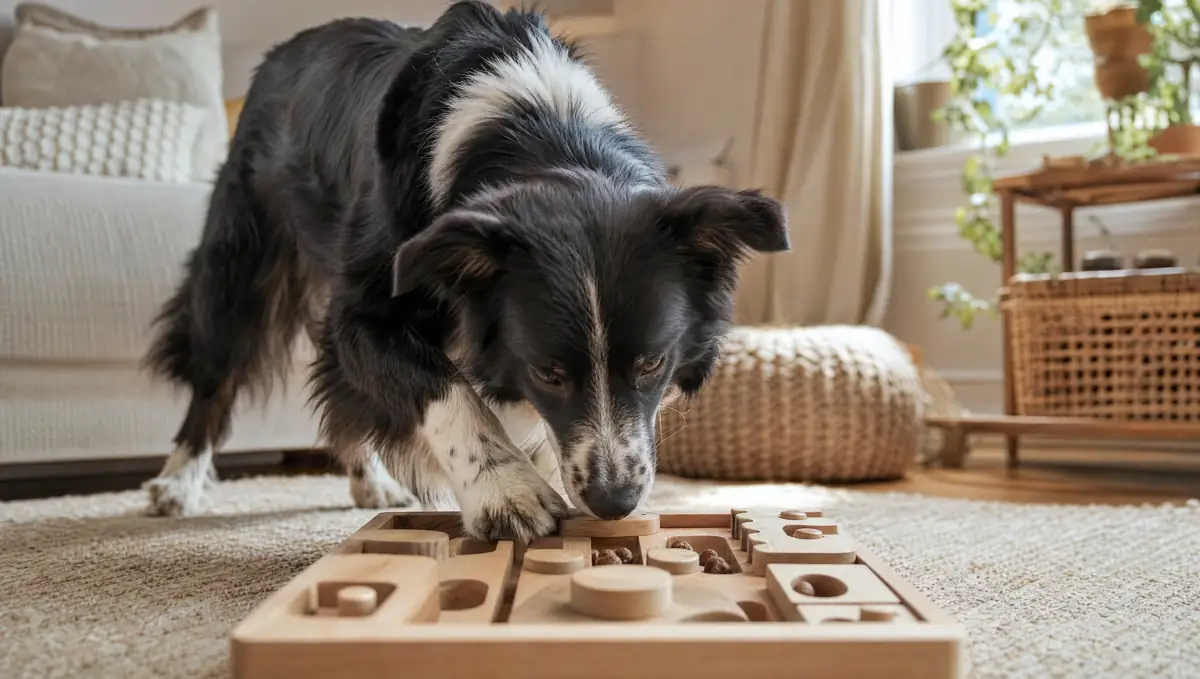
- Enough exercise and mental work. A dog with pent-up energy struggles to focus. Short dog brain games before a session help many dogs settle.
- Reward-based methods. AVSAB recommends reward-based training and advises against aversive methods, which it links to increased fear and stress.
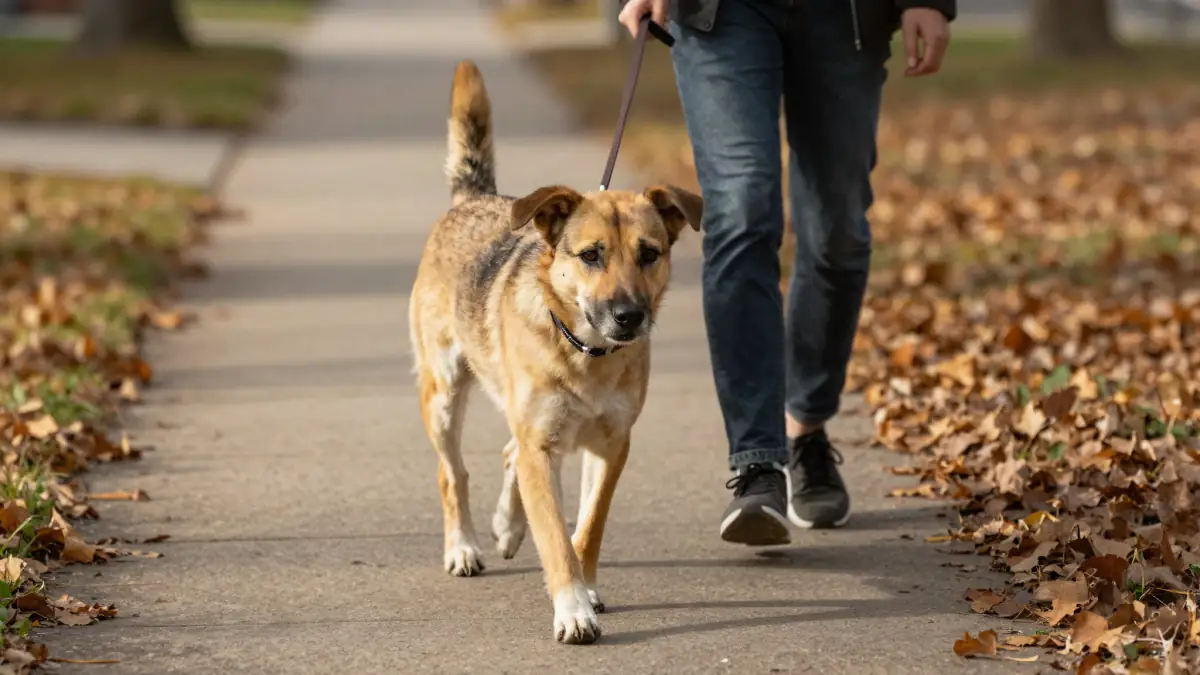
Illustrative photos.
What slows training down
- Repeating cues. Saying "sit, sit, SIT" teaches the dog the cue is "sit" three times.
- Moving to hard settings too soon. Practice at home before the park.
- Punishment and corrections. These can suppress behavior without teaching what to do, and can add fear.
- Adolescence. Between about 6 and 18 months, many dogs seem to "forget" cues for a while. Go back a step and keep practicing; it passes.
- Stress, pain, or illness. A dog that suddenly stops responding may not feel well. Check with your veterinarian.
If you want a ready-made plan instead of building one yourself, Brain Training for Dogs is one structured option: a $67 one-time online course with a 60-day refund window (as checked October 2026). It is organized as games across 7 modules, according to the vendor. Our Brain Training for Dogs review covers what is included.
Paid link · opens the vendor's sales page.
Rescue dogs and dogs with a history
Many rescue dogs need time to decompress before formal training. A common guideline is the "3-3-3" pattern: about 3 days to decompress, 3 weeks to learn the routine, and 3 months to feel at home. Keep early sessions very short and easy.
Fear, reactivity, and aggression are not normal obedience problems and usually take months of careful work. Start with your veterinarian, then a certified behavior professional, such as a veterinary behaviorist (DACVB), a CAAB, or an IAABC-certified consultant.
Problem behaviors: realistic timelines
| Problem | Typical time to see clear improvement |
|---|---|
| Puppy biting | Weeks, fading as adult teeth come in by about 6 to 7 months |
| Jumping on guests | 2 to 6 weeks of consistent practice |
| Demand or alert barking | A few weeks for a quiet cue; longer for strong triggers |
| Leash pulling | 1 to 2 weeks for progress, 1 to 3 months for reliability |
| Fear or reactivity | Several months, with professional guidance |
For specific help, see how to stop puppy biting, how to stop dog barking, and mental stimulation for dogs.
Training never really ends
A well-trained dog still needs practice. Keep skills fresh with a few minutes of training most days and occasional rewards for good behavior. The upside is that maintenance takes far less time than the first few months. Most owners who stay consistent find that by about 6 to 12 months, the dog's everyday manners take very little effort.
Frequently asked questions
How long does it take to train a dog basic commands?
Most dogs learn sit, down, come, stay, and leave it at home in about 4 to 8 weeks with short daily sessions. Making those cues reliable around distractions usually takes about 3 to 6 months.
How many minutes a day should I train my dog?
Many trainers recommend 5 to 15 minutes per session, once or twice a day. Puppies under 4 months do better with 2 to 5 minute sessions several times a day.
How long does it take to house train a puppy?
House training commonly takes 4 to 6 months, and some puppies need up to about 12 months to be fully reliable. A consistent potty schedule and crate routine speed it up.
Is it too late to train an older dog?
No. Adult and senior dogs learn new skills well. Changing a long-practiced habit may take more repetitions, so keep sessions short, easy, and rewarding.
Why does my dog know a command at home but not outside?
The dog has not generalized the behavior yet. Practice in gradually harder places, from the house to the yard to quiet streets, before expecting it at the park.
Can a dog be trained in 2 weeks?
A dog can learn a few basic cues in 2 weeks, but reliable behavior in real life takes months. Be wary of any program that guarantees a fully trained dog in days.
When should I get a professional trainer or behaviorist?
For fear, reactivity, or aggression, start with your veterinarian and then a certified behavior professional such as a DACVB, CAAB, or IAABC consultant. For general manners, a reward-based group class is a good option.