Crate Training Schedule: How Long to Crate a Puppy at Every Age
We may earn a commission from links on this page, at no extra cost to you. Disclosure
Quick answer
A common rule of thumb is that a puppy can hold its bladder about one hour per month of age, plus one, during the day. Crate an 8 to 10 week old puppy for 30 to 60 minutes at a time, build up to 4 to 5 hours by 4 to 6 months, and keep adult dogs to no more than about 6 to 8 hours. Make the crate rewarding and never use it as punishment.
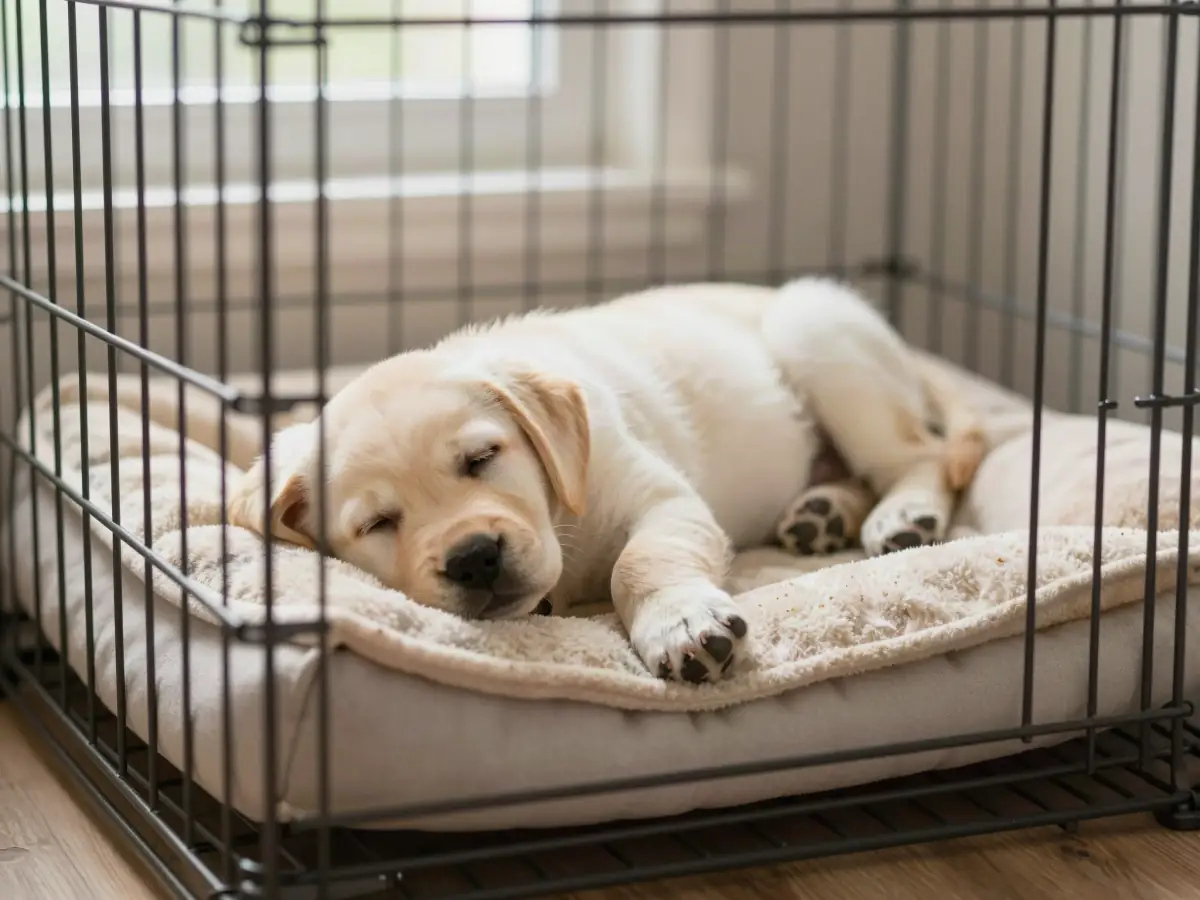
Quick answer: A puppy crate training schedule is built around the puppy's bladder. A common rule of thumb is that a puppy can hold it for about one hour per month of age, plus one, during the day. So an 8-week-old puppy needs a potty break about every 2 hours, and a 4-month-old about every 4 to 5 hours. Start with crate sessions of a few minutes, keep the crate a happy place, and never use it as punishment. Below is a schedule table by age, a sample day, and the step-by-step method.
Why crate training helps
Done well, a crate gives a puppy a quiet den to rest in and gives you a safe place to put the puppy when you cannot watch it. It speeds up house training, because most puppies avoid soiling the spot where they sleep. It also prevents chewing accidents, and it makes car travel and vet stays less stressful later.
A crate is a tool for management and rest, not a place to store a dog all day. The goal is a puppy that walks into the crate on its own and settles.
Crate training schedule by age
These are commonly cited daytime maximums for healthy puppies. Every puppy is different, and small breeds often need breaks sooner. Overnight stretches can be longer because puppies sleep, but young puppies still usually need one or two night-time potty trips.
| Age | Max daytime crate time | Potty breaks (day) | Overnight |
|---|---|---|---|
| 8 to 10 weeks | 30 to 60 minutes | Every 1 to 2 hours, plus after every nap, meal, and play | Expect 1 to 2 trips out |
| 11 to 14 weeks | 1 to 3 hours | Every 2 to 3 hours | Usually 1 trip out |
| 15 to 16 weeks | 3 to 4 hours | Every 3 to 4 hours | Many sleep 6 to 7 hours |
| 4 to 6 months | 4 to 5 hours | Every 4 to 5 hours | Most sleep through the night |
| 6 months and older | Up to about 6 hours | Every 4 to 6 hours | Through the night |
| Adult dog | No more than about 6 to 8 hours, and not every day | At least every 6 to 8 hours | Through the night |
If your puppy regularly has accidents in the crate, the stretches are too long for that puppy. Shorten them, and ask your veterinarian to rule out a urinary infection or other medical cause.
Sample day for an 8 to 10 week old puppy
Young puppies sleep about 18 to 20 hours a day. A predictable rhythm of potty, play, train, and nap keeps accidents and evening biting down.
| Time | Activity |
|---|---|
| 6:30 am | Out of crate, straight outside to potty |
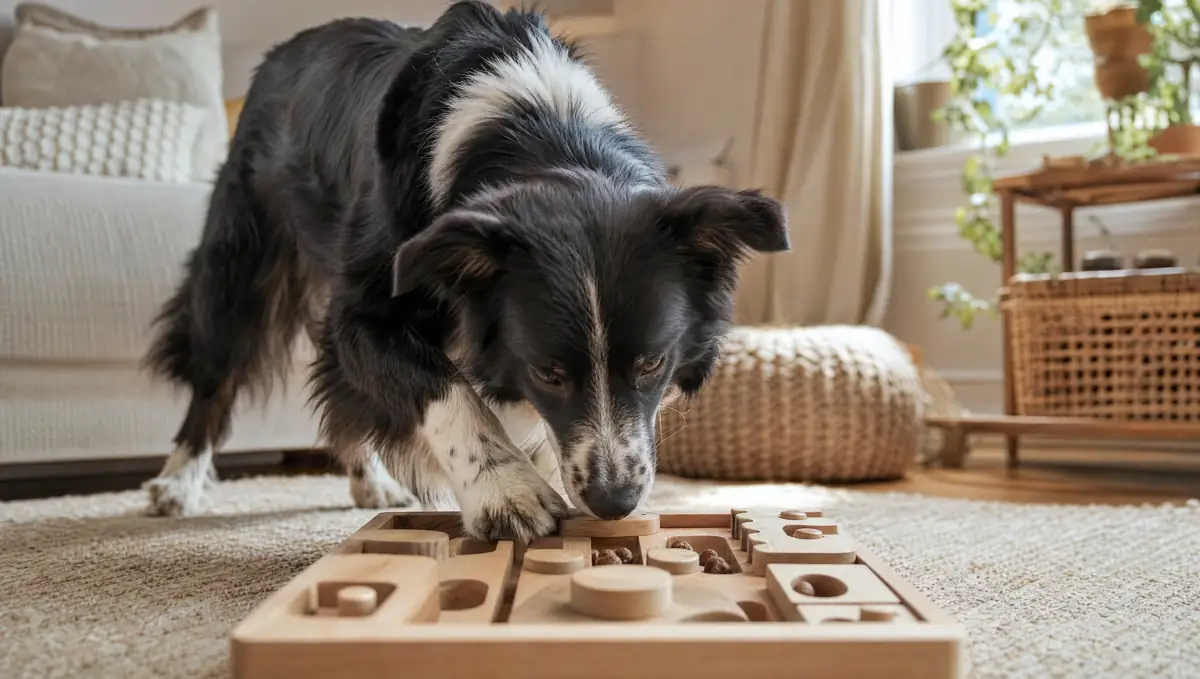
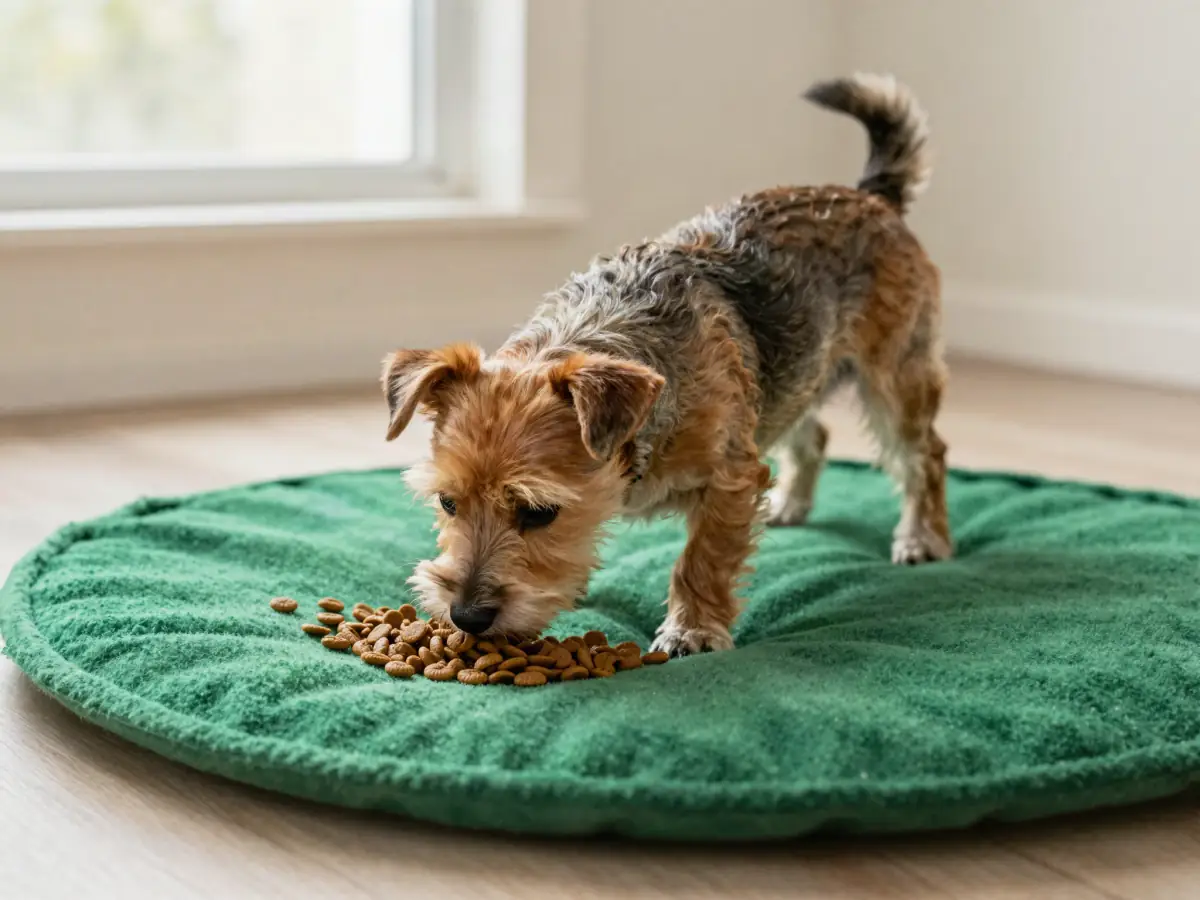
| 6:45 am | Breakfast (from a puzzle feeder or snuffle mat), then potty again |
| 7:00 am | Play and 3 to 5 minutes of training |
| 7:45 am | Potty, then nap in the crate with a chew |
| 9:30 am | Potty, play, short sniff game |
| 10:15 am | Potty, nap in crate |
| 12:00 pm | Potty, lunch, potty, quiet play |
| 1:00 pm to 5:00 pm | Repeat: potty, 45 to 60 minutes awake, potty, nap |
| 5:30 pm | Dinner, potty, calm play |
| 7:00 pm | Planned nap before the usual "crazy hour" |
| 9:00 pm | Short play, last water, potty |
| 10:30 pm | Final potty, bedtime in crate |
| 2:00 to 3:00 am | Quiet, boring potty trip, straight back to crate |
Keep the night trip dull: no play, no talking, lights low. As the puppy grows, push the night trip later by 15 to 30 minutes every few nights until it is no longer needed.

Step 1: Set up the crate
Choose a crate big enough for the adult dog to stand, turn around, and lie down stretched out. For a growing puppy, use a divider so the space is just big enough to lie down, which discourages using one end as a toilet.
Put it in a room where the family spends time, such as the living room, and consider a second spot near your bed for nights. Add a washable bed or blanket, and drape a light cover over three sides if your puppy settles better in a den-like space.
Step 2: Make the crate the best place in the house
- Leave the door open and toss treats inside. Let the puppy go in and out freely.
- Feed meals in or near the crate, moving the bowl further back over a few days.
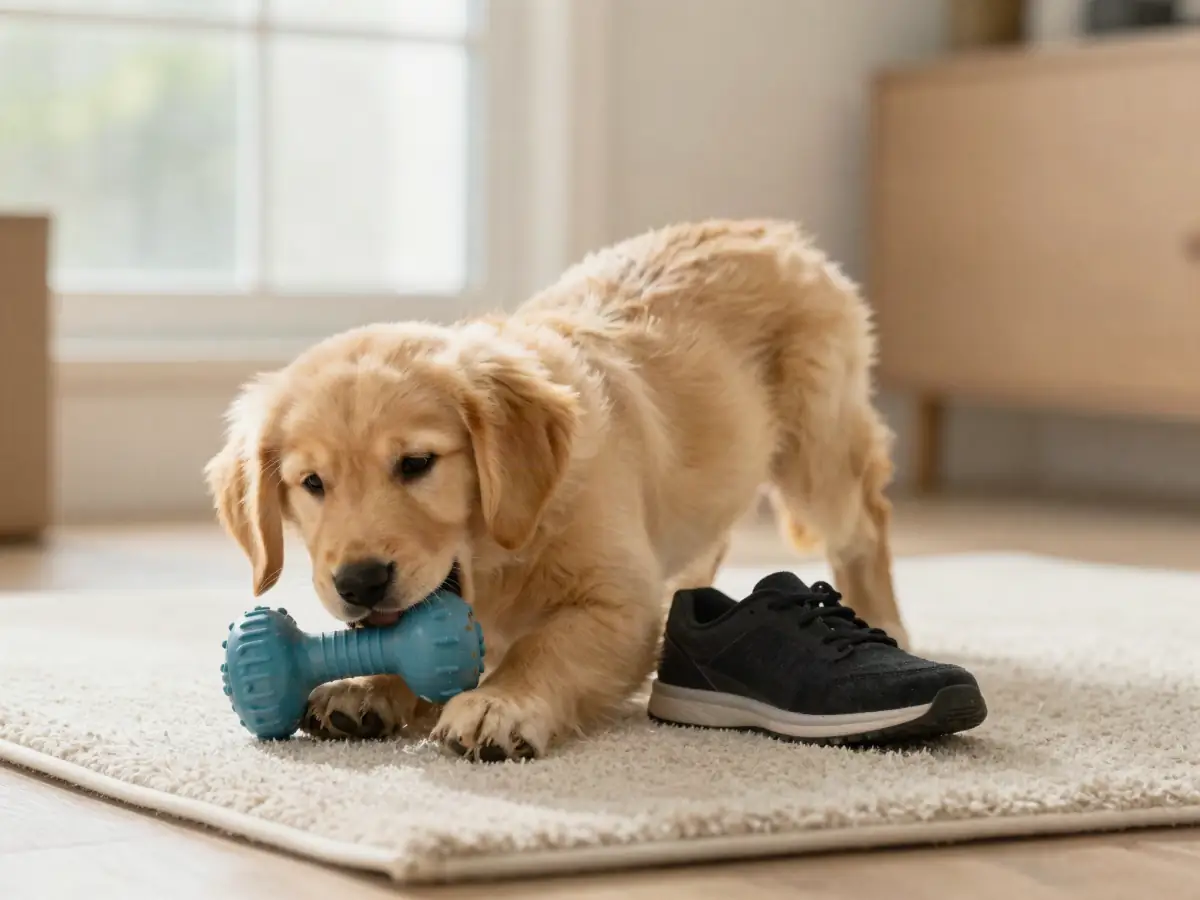
- Give special chews or a stuffed food toy only in the crate.
- Once the puppy walks in happily, close the door for a few seconds while it eats, then open it before it finishes.
Spend 2 to 4 days on this stage, with several short sessions a day. Rushing it is the most common reason crate training stalls.
Step 3: Build up time in small steps
With the door closed and the puppy busy with a chew, sit next to the crate for 1 minute, then 2, then 5. Next, step out of sight for a few seconds and come back calmly. Build to 10, 20, then 30 minutes over several days.
Let the puppy out when it is quiet, not while it is crying. If you open the door during a fuss, the puppy learns that crying works. If crying starts, wait for even a 2-second pause, then open the door. Next time, make the step smaller.
Step 4: Handle crying at night
Some crying in the first nights is normal, since the puppy has just left its litter. These steps help:
- Crate near your bed for the first 1 to 2 weeks, so you can rest a hand near the door.
- Take a potty trip if the puppy wakes and cries after a few hours. Young puppies often genuinely need to go.
- Tire the puppy kindly with an evening sniff game and short training session, then a calm wind-down.
- Do not punish crying. Shouting, banging the crate, or spray bottles add fear and usually make settling harder.
Illustrative photos.
Short brain games make crate time easier because a mentally satisfied puppy settles faster. Brain Training for Dogs is one structured option: a $67 one-time online course with a 60-day refund window (as checked October 2026), and the vendor lists a puppy section that covers crate training. Our Brain Training for Dogs review has the details.
Paid link · opens the vendor's sales page.
Signs crate training is working
Look for these five signs over the first 2 to 3 weeks.
- The puppy walks into the crate on its own, often to nap.
- It settles within about 5 minutes of the door closing.
- Crying in the first week shrinks from minutes to seconds.
- The crate stays clean for the full stretch shown in the age table.
- Night-time potty trips drop from 2 to 1 to none as the puppy grows.
If progress stalls for more than a week, go back one step: shorter sessions, better chews, and more time with the door open. Most stalls come from moving too fast, not from a "bad" puppy.
Crate training an adult or rescue dog
Adult dogs can learn to love a crate too, but give them more time. Start with the door open for several days, feed every meal inside, and only close the door once the dog chooses to lie down there. Many rescue dogs need a week or two before the first closed-door session. If an adult dog has never been confined, a gated room or exercise pen can be a gentler first step.
Crate training mistakes to avoid
- Using the crate as punishment. The crate must always predict good things.
- Crating too long. Stick to the age table. If you work long days, arrange a dog walker or a pen with a potty area.
- Skipping exercise before crate time. A puppy with pent-up energy will protest louder.
- Leaving a collar or harness on in the crate, which can snag. Remove them unless your vet advises otherwise.
- Unsafe toys. Only leave chews that cannot be broken into swallowable pieces.
When to get help
Some puppies and adult rescue dogs panic in a crate. Signs include drooling, frantic scratching, bent bars, injured paws or teeth, or non-stop howling for long periods. Stop crating that dog, use a safe pen or room instead, and talk to your veterinarian. Panic in confinement can be linked to separation-related distress, which is best handled with a certified behavior professional, such as a veterinary behaviorist (DACVB), a CAAB, or an IAABC-certified consultant.
For related puppy topics, see our guides on how to stop puppy biting and how long it takes to train a dog.
Frequently asked questions
How long can a puppy stay in a crate?
A common guideline is 30 to 60 minutes at 8 to 10 weeks, 1 to 3 hours at 11 to 14 weeks, 3 to 4 hours at 15 to 16 weeks, and 4 to 5 hours at 4 to 6 months during the day. Overnight stretches can be longer because the puppy is asleep.
Should I crate my puppy at night?
Many owners do, with the crate next to the bed for the first 1 to 2 weeks. Expect 1 to 2 quiet potty trips per night for an 8 to 10 week old puppy, fewer as it grows.
How long does crate training take?
Many puppies accept the crate within 1 to 3 weeks of short daily practice, and settle for several hours by 4 to 6 months. Adult dogs with no crate history, or dogs that panic in confinement, can take longer.
Should I let my puppy out when it cries in the crate?
Wait for a brief pause in crying before opening the door, so the puppy does not learn that crying works. At night, a crying young puppy may truly need to potty, so take a quiet, boring trip outside and return to the crate.
Is crate training cruel?
Used well, a crate is a safe resting place that many dogs choose on their own. It becomes a problem when dogs are crated for too long, crated as punishment, or crated while they are panicking.
What if my dog panics in the crate?
Stop crating, use a safe pen or room instead, and talk to your veterinarian. Panic in confinement can be linked to separation-related distress, which is best handled with a certified behavior professional.